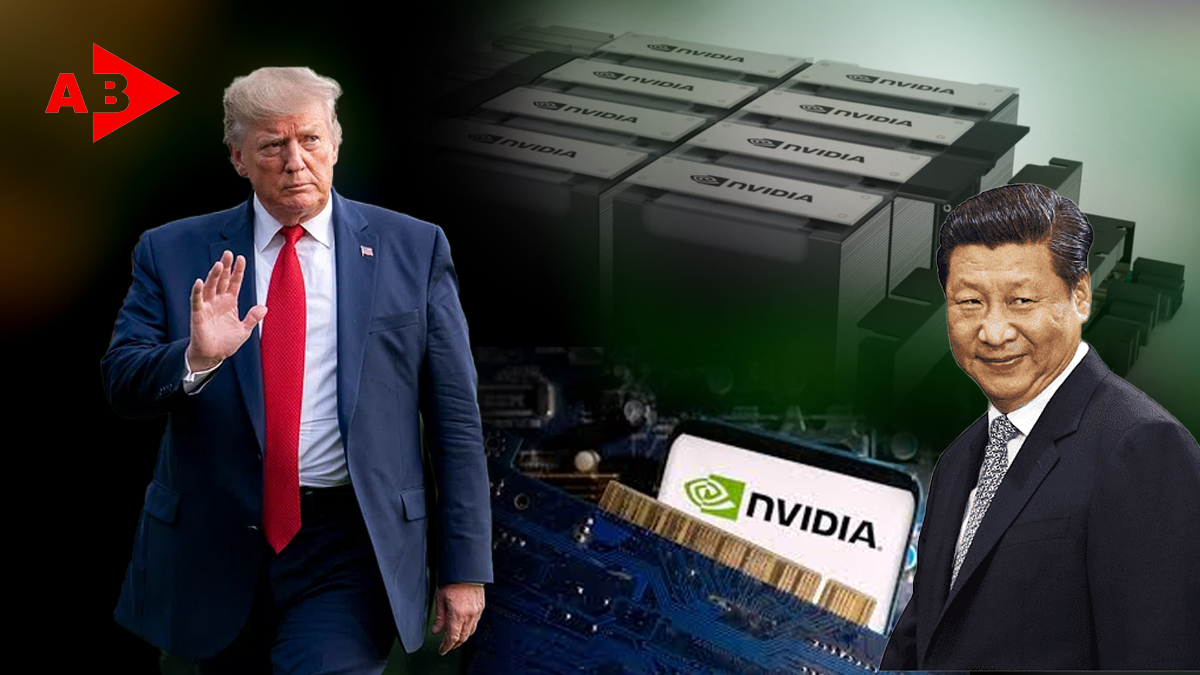
J. Roy, New Delhi: On December 8, U.S. President Donald Trump announced a pivotal shift in the Biden administration’s policies regarding high-tech exports to China, permitting the export of Nvidia’s (NVDA.O) H200 artificial intelligence (AI) chips to Chinese markets with a 25% fee. This decision marks a significant development in the ongoing geopolitical and technological tug-of-war, raising critical questions about national security, economic competitiveness, and the future trajectory of AI technology amidst fierce US-China competition.
A Strategic Compromise or a Risky Balance?
The decision appears to strike a delicate compromise. Historically, the U.S. has sought to restrict China’s access to advanced chip technology, fearing that such hardware could bolster Beijing’s military and surveillance capabilities. The Biden administration, for instance, had placed limits on exports of cutting-edge AI chips, notably the Blackwell series, which are nearly ten times faster than the currently exportable H200 chips, according to Nvidia’s internal research.
By authorizing the sale of the H200 — a chip approximately six times less powerful than the Blackwell chips — the U.S. aims to maintain its technological leadership while avoiding a complete cut-off that might benefit China’s domestic industry or bolster Huawei’s efforts to develop indigenous AI hardware. This approach is seen as a “thoughtful balance,” allowing vetted commercial customers to access advanced chips without outright enabling China’s military modernization.
Economic and Geopolitical Implications
The immediate market reaction was positive; Nvidia shares rose 2% after the announcement, reflecting investor optimism about the company’s ability to expand sales in China amid ongoing geopolitical tensions. The move is also framed as part of broader efforts to support American jobs and economic leadership in AI, with the White House emphasizing that the revenue from the 25% fee — confirmed to be an import tax from Taiwan — will fund security reviews and contribute to the U.S. economy.
However, critics from across the political spectrum warn of significant risks. Several Democratic senators described the decision as a “colossal security failure,” warning that China could leverage these chips to enhance military capabilities and surveillance infrastructure. Republican critics, including House China Committee Chair John Moolenaar, echoed concerns that China would reverse-engineer and mass-produce the chips, potentially ending Nvidia’s competitive edge.
Security Concerns and China’s Response
China’s response underscores the complexity of such export decisions. The Chinese government has expressed skepticism about U.S. intentions, with some officials suggesting that Beijing remains wary of allowing imported chips due to fears of security breaches or backdoors. This skepticism is not unfounded; previous allegations by Chinese regulators accused Nvidia’s H20 chips of potential security risks, which Nvidia has denied.
Moreover, China’s tech industry is actively seeking to reduce reliance on foreign chipmakers. Companies like Huawei, Cambricon, and Moore Threads are aggressively developing indigenous AI chips, while Beijing has issued warnings to domestic firms about purchasing downgraded Nvidia chips to avoid potential security vulnerabilities. This internal push towards self-reliance complicates the effectiveness of U.S. export relaxations, as China may limit or control the import of these chips through regulatory or security measures.
The Broader Geopolitical Context
This move occurs against the backdrop of escalating U.S.-China tensions over technological dominance. While the Biden administration had previously imposed restrictions to curb China’s military modernization, the decision to allow limited exports indicates a pragmatic shift, possibly driven by economic imperatives and the recognition that complete bans may be counterproductive.
The timing coincides with the Justice Department’s recent crackdown on a China-linked chip smuggling ring attempting to illegally export at least $160 million worth of Nvidia’s high-end chips, illustrating ongoing concerns over unauthorized transfers and espionage risks.
Looking Ahead
Will this policy shift accelerate China’s AI capabilities or stoke an arms race in semiconductors? The answer hinges on multiple factors: China’s internal policies, the scope of export controls, and the willingness of the U.S. to enforce security measures. While Nvidia and other U.S. firms stand to benefit from expanded access to the Chinese market, the long-term implications for global AI leadership and security remain uncertain.
In conclusion, the U.S. decision to permit Nvidia’s H200 exports to China embodies a nuanced attempt to balance economic interests with national security concerns. As both nations continue to navigate this high-stakes technological competition, the outcome will significantly influence the future of AI development, global supply chains, and geopolitical stability in the digital age.