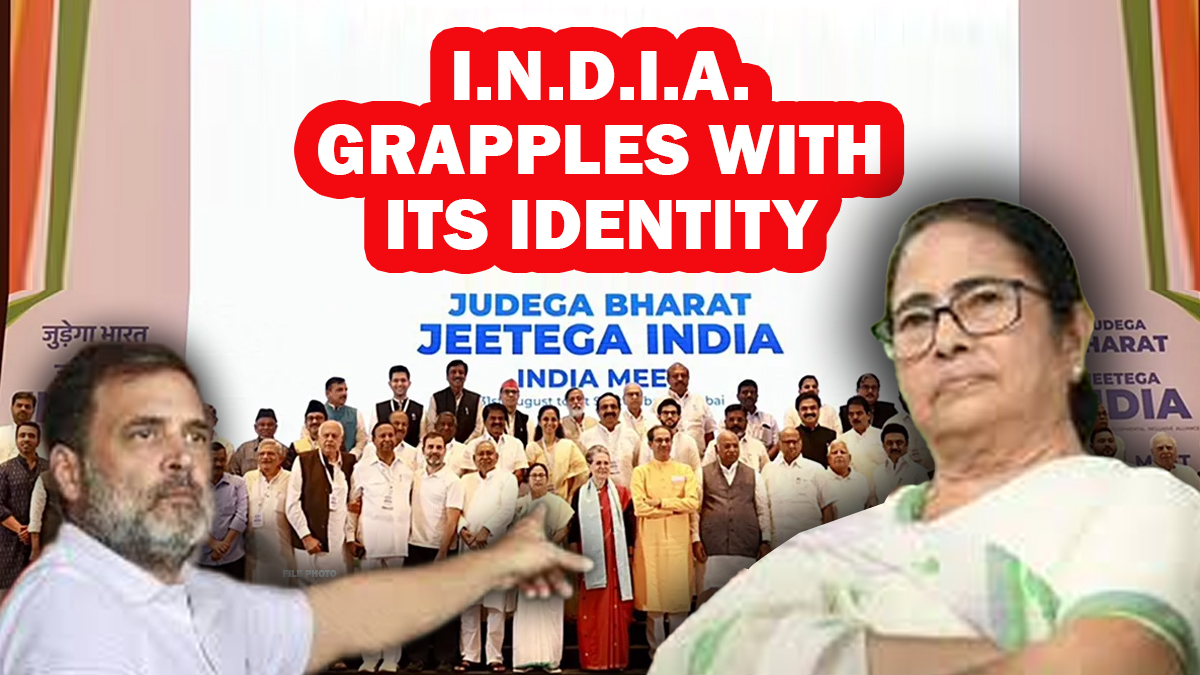
The opposition alliance I.N.D.I.A. (Indian National Developmental Inclusive Alliance) in June 2023 was heralded as a unified front to challenge the ruling Bharatiya Janata Party (BJP)
Jotirmoy Roy, AB News, New Delhi: In the politically charged landscape of India, the formation of the opposition alliance I.N.D.I.A. (Indian National Developmental Inclusive Alliance) in June 2023 was heralded as a unified front to challenge the ruling Bharatiya Janata Party (BJP) during the impending Lok Sabha elections. With the rallying cry of “BJP Hatao, Desh Bachao,” the alliance sought to bring together disparate political factions under a common goal. However, cracks are now beginning to show within this coalition, raising critical questions about its future viability and effectiveness.
The recent departure of the Samajwadi Party (SP) from the Maharashtra Vikas Aghadi (MVA) and the visible dissatisfaction expressed by West Bengal’s Chief Minister Mamata Banerjee signal growing discontent within the I.N.D.I.A. alliance. Initially led by Nitish Kumar of Janata Dal (United), the coalition aimed to consolidate opposition strength against the BJP. However, Kumar’s decision to realign with the NDA raised eyebrows and demonstrated the challenges of sustaining such a broad alliance in a competitive political environment.
Lately, the SP’s exit after comments praising the demolition of the Babri Masjid by a Shiv Sena leader reflects deeper ideological fractures within the alliance. Political grudges and power tussles have surfaced, leading to a situation where coalition partners are at odds not just with the BJP, but increasingly with each other. The discord highlights a critical vulnerability: the alliance’s apparent inability to convert its electoral successes into a cohesive strategy.
As allies question Congress’s leadership role and its handling of seat-sharing dynamics, the SP’s discourse on respect and coordination signifies broader sentiments among coalition partners. The lack of communication and collaborative decision-making has been particularly damaging. While Congress has traditionally been seen as the anchor of the alliance, many regional parties feel marginalized and resentful, prompting calls for a reassessment of its leadership and strategy.
Furthermore, Mamata Banerjee’s intentions to take the reins of the opposition front have stirred discussions about leadership and the need for a more collaborative approach. Political ambitions intertwined with regional concerns are paramount in a coalition that promises diverse viewpoints but often complicates unity. The risk, as echoed by many analysts, is that the current instability could render the I.N.D.I.A. alliance ineffective in the face of a formidable BJP.
The divergence in objectives among the alliance members must be reconciled if I.N.D.I.A. hopes to remain a politically relevant force. This could mean embracing a more democratic process for decision-making or reassessing the coalition’s focus areas to ensure that all voices are heard. The regional nuances, alongside the overarching mission of ousting the BJP, must form the bedrock of their strategy moving forward.
As I.N.D.I.A. grapples with its identity, the essential question remains: Can this coalition bridge its differences and emerge as a unified opposition force? Or will internal strife lead to its disintegration? The answer may determine the political landscape as India heads toward the next electoral battle.
Overall, the I.N.D.I.A. alliance represents a significant political experiment in India. However, navigating the complexities of coalition politics requires a level of cooperation and commitment that could prove challenging in the current environment. For it to succeed, all involved must recognize the necessity of coming together—not just to oppose the BJP, but to genuinely represent the diverse fabric of Indian society.